Biometric Systems Driving Shifts in Player Verification for Digital Card Platforms
Written by Carlo Hughes · Sep 10, 2026

Biometric Systems Driving Shifts in Player Verification for Digital Card Platforms
Biometric verification has moved from experimental trials into mainstream deployment across digital card platforms, where operators integrate fingerprint scanners, facial recognition, and voice analysis to confirm player identities during account creation and ongoing sessions. These technologies replace or supplement traditional password and two-factor methods because they tie authentication directly to physical traits that remain consistent over time, while platforms report reduced instances of account sharing and unauthorized access according to industry implementation data.
Core Technologies Behind the Changes
Digital card platforms now deploy multimodal biometric setups that combine multiple data points such as facial geometry captured through device cameras and fingerprint patterns read via touch sensors, which creates layered verification that demands simultaneous matches before granting access. Research indicates that such systems process templates rather than raw images, storing encrypted mathematical representations instead of photographs or prints, and this approach aligns with standards outlined by the National Institute of Standards and Technology through its biometric programs. Operators have observed that integration occurs at login points, deposit stages, and during high-value transactions, where the system prompts for a quick scan that completes in under two seconds on modern devices.
Voice biometrics adds another dimension in live dealer environments, analyzing vocal patterns during player interactions with dealers or support teams, while algorithms filter background noise and focus on unique frequency signatures. Those who manage platform security note that these tools operate continuously in the background once initial enrollment finishes, flagging deviations that might signal a different user attempting to continue a session.
Platform Adoption Patterns Through 2026
By September 2026 several major digital card operators had completed phased rollouts of biometric authentication across mobile and desktop clients, driven by regulatory expectations in multiple jurisdictions that require stronger identity assurance. Figures from the Canadian Gaming Association reveal increased compliance rates among licensed platforms that adopted these systems earlier, with data showing faster account recovery processes when players lose access credentials. European operators followed similar timelines after guidance from bodies such as the European Union Agency for Cybersecurity encouraged standardized testing protocols for biometric accuracy in online gaming contexts.
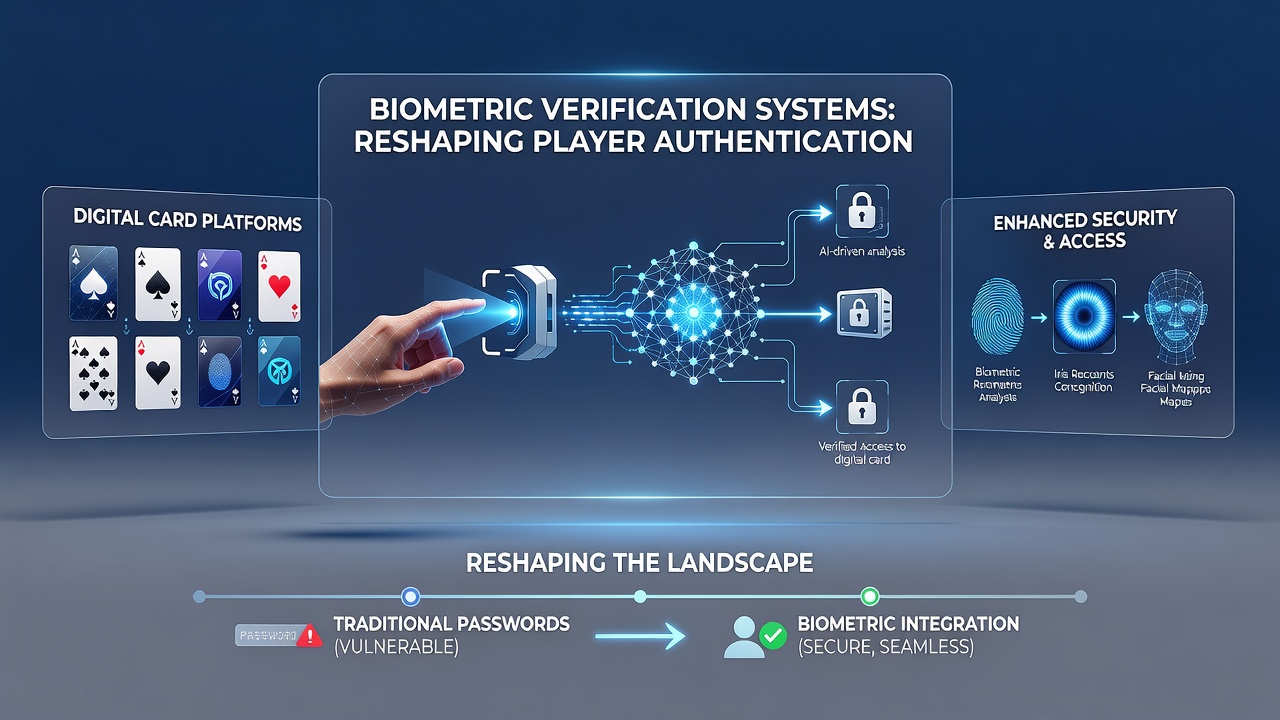
Enrollment typically happens during first-time registration or upon account upgrade, requiring players to provide samples under controlled conditions that platforms verify against government-issued documents through optical character recognition paired with biometric cross-checks. This workflow reduces manual review times for operators, yet it maintains audit trails that regulators can examine during compliance checks. Observers note that platforms in Australia incorporated similar requirements after updates from the Australian Cyber Security Centre highlighted biometric options for protecting financial transactions within gaming accounts.
Security and Operational Impacts
Biometric systems deliver measurable reductions in fraud attempts on digital card platforms, with reports indicating fewer cases of identity theft once fingerprint or facial checks become mandatory at key points. The technology also supports responsible gaming measures by enabling operators to link accounts more reliably to individual users, which helps enforce self-exclusion lists and deposit limits without relying solely on usernames that players might share. Data from academic studies on gaming security shows that false acceptance rates have dropped below industry thresholds when platforms combine biometrics with behavioral analytics that monitor session patterns alongside physical traits.
Yet implementation requires attention to device compatibility, because older hardware may lack sufficient sensor quality for accurate readings, prompting platforms to offer fallback methods that still meet verification standards. Those managing large-scale deployments report that regular template updates help account for gradual changes in appearance or fingerprints caused by aging or injury, maintaining system reliability over extended periods.
Regulatory and Privacy Considerations
Jurisdictions continue refining rules around biometric data handling, requiring platforms to obtain explicit consent and provide clear deletion options when accounts close. Canadian and Australian frameworks emphasize data localization and independent audits, while platforms must demonstrate that stored templates cannot be reverse-engineered into usable images. Research from university-led projects on digital identity confirms that encryption standards have advanced sufficiently to protect these datasets during transmission and storage, supporting broader adoption without compromising player privacy expectations.
Conclusion
Biometric verification continues to integrate into digital card platform operations, reshaping how operators confirm identities and manage access while meeting evolving regulatory demands across regions. The combination of established standards from organizations such as the National Institute of Standards and Technology with regional guidance ensures consistent performance, and ongoing refinements in September 2026 and beyond will likely expand these systems further into everyday player interactions. Platforms that maintain transparent practices around data use and system accuracy position themselves to sustain trust as authentication methods evolve.